How to Create a Digital Marketing Plan for a Small Business in 2026
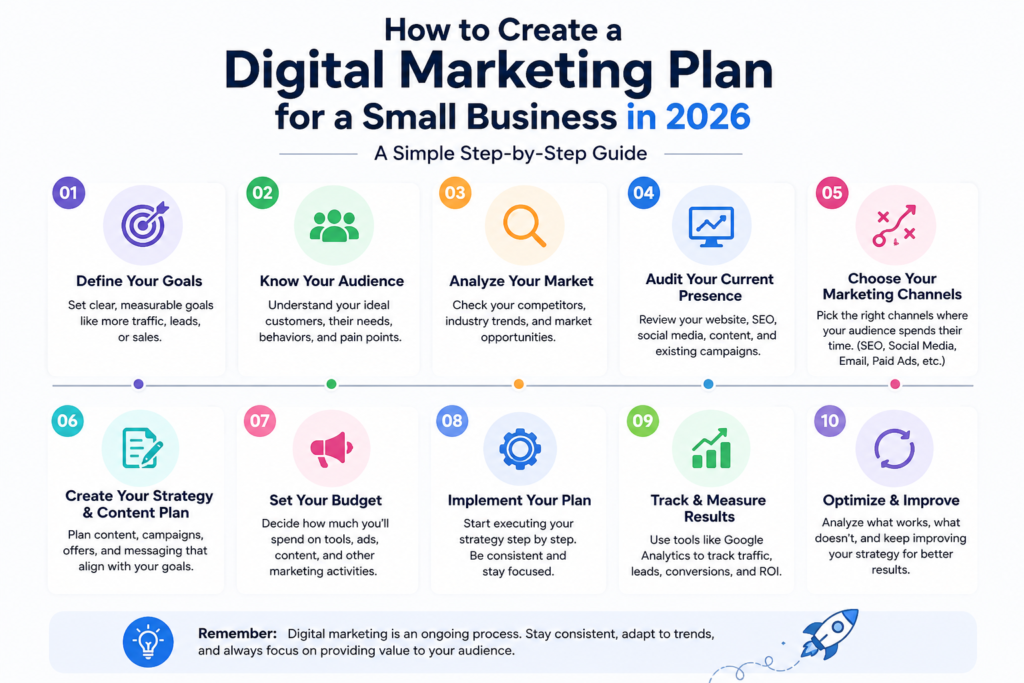
digital marketing for small business .If you own a business you might have felt the need to be present everywhere on the internet. Search engine optimization, social media, advertisements, email campaigns, content creation, all at the same time.. Digital marketing for a small business doesn’t require you to do all of these things. It means focusing on the things that matter in the sequence, based on your goals and the money you have to spend. digital marketing for small businessdigital marketing for small business digital marketing for small business
After years of helping local businesses and small online stores I have noticed a similar pattern over and over again: the businesses that grow in a steady way are not the ones with the largest budgets. They are the ones with a honest plan.
Here is how to make one, for your business in 2026.
Building a marketing strategy for a small business in 2026 can be really tough. If you own a business you have probably felt like you need to be online everywhere at the same time. This means doing search engine optimization using media paying for advertisements sending emails and creating content all at once.
But the thing is, digital marketing for a business does not have to mean doing all of these things. It is about doing the digital marketing things in the right order, based on what you want to achieve and how much money you have to spend.
I have worked with a lot of businesses and small online stores for a long time. I have seen the same thing happen over and again. The businesses that grow slowly but steadily are not the ones that spend the money. They are the ones that have an realistic digital marketing strategy.
Here is how you can build a marketing strategy, for your small business in 2026.
Table of Contents
A 7-Step Framework for Building Your Strategy
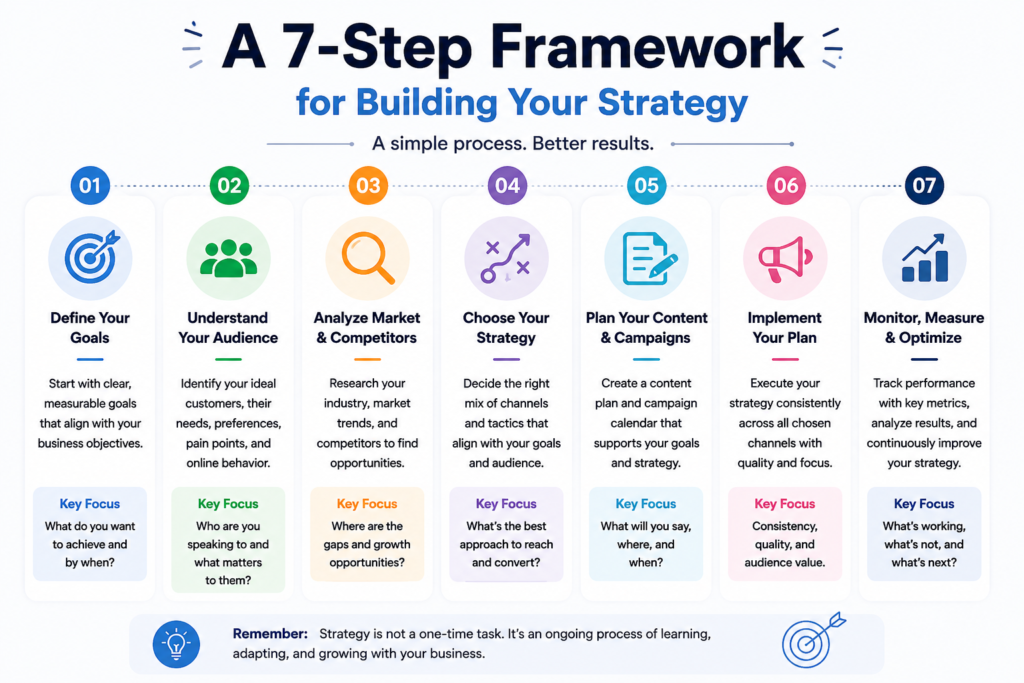
There is no one size fits all plan that works for every business. The right strategy for a business depends on the goals of the business the audience of the business the competitors of the business and the budget of the business. The process of figuring out the strategy for a business is pretty much the same. Here is the framework I use when I work with a business.
1. Understand the Business
Before you start using any marketing channel you need to understand the business itself. You need to know who the target audience of the business is, what the goals of the business are, who the competitors of the business are and what the online presence of the business looks like. If you skip this step you might end up using tactics that do not actually work for the business.
2. Research the Market and Keywords
You need to find out what people are searching for online. This means finding keywords that your business can actually compete for. You should not just look for keywords that have a lot of searches you should look for keywords that your business can genuinely rank for or advertise against.
3. Audit the Current Presence
You need to review the website of the business the SEO performance of the business the social media accounts of the business the existing content of the business and any current paid campaigns of the business. This step usually shows you where the business is going wrong. You might find out that the website of the business is outdated the Google Business Profile of the business is. The ad campaigns of the business are not targeted properly. digital marketing for small business
4. Set Clear and Measurable Goals
If your goals are not specific you will not be able to measure them. You need to define objectives for the business, such as increasing the website traffic of the business by a certain amount generating a set number of leads improving the rankings of the business for target keywords or increasing the conversion rate of the business. digital marketing for small business
5. Choose the Right Channels
Not every business needs to use SEO, content marketing, social media and paid ads at the time. You need to choose the channels that match the goals and budget of the business. You should not try to use all the channels at once.
6.. Implement the Strategy
You need to build a practical plan for the content and campaigns of the business. Then you need to implement the plan consistently. If you have a strategy but you do not implement it properly it will not work. A simple strategy that is implemented well can work better, than a strategy that is not implemented properly.digital marketing for small business
7. Track and Optimize
You need to monitor the metrics that matter for the goals of the business find out what is working and make changes based on the data. Digital marketing is not something that you can set up and forget about. You need to keep track of the metrics and make changes to improve the results of the business.digital marketing for small business
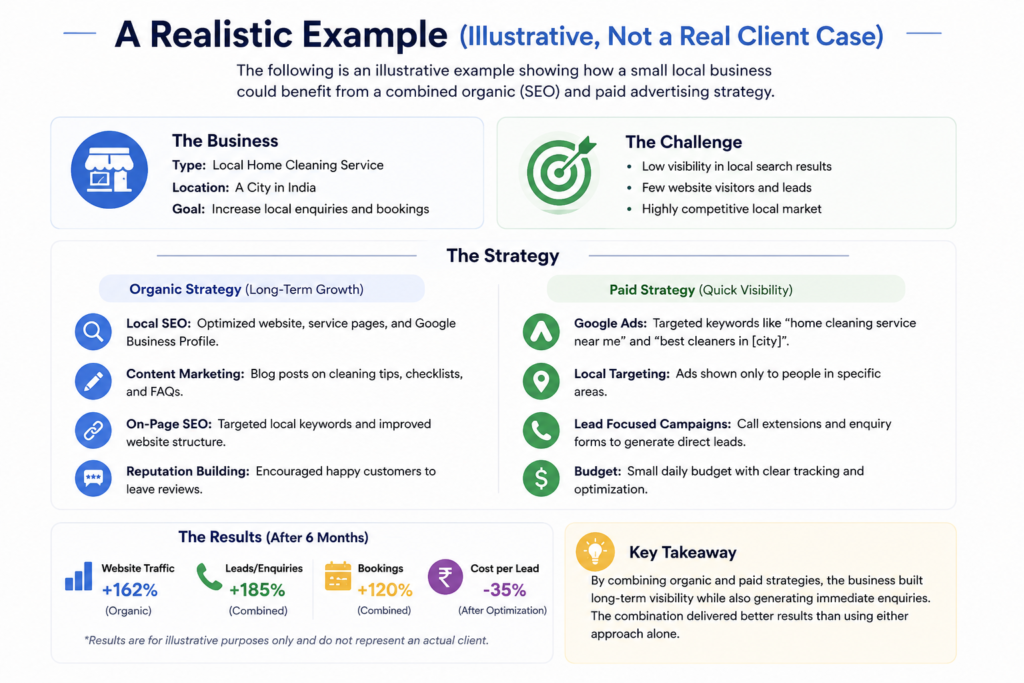
A Realistic Example (Illustrative, Not a Real Client Case)
To show how this framework plays out, here’s an illustrative example — not a real client result, just a realistic scenario based on patterns I commonly see.
https://www.hackingthecaseinterview.com/pages/case-interview-examples-and-practice
Imagine a local service business — say, a plumbing company — that has a basic website and no consistent marketing. Following the framework above, the business could:
Publish helpful content answering common customer questions
Run a small, tightly targeted paid ad campaign for its highest-demand services
Over a few months, the combination of organic SEO (building long-term visibility) and paid ads (generating faster enquiries) could realistically increase both the number of enquiries and the overall visibility of the business — without requiring a large budget.digital marketing for small business
Where to Spend Your First Dollars When You Have a Small Budget
Money is usually the problem, for small businesses so choosing where to put it is important. Here is a basic guide:
Priority
Where to Focus
Why
First
A website that works well. Local search engine optimization
It is a base that keeps helping you even after you stop paying for it
Second
Google Business Profile
It helps people find you when they search locally. It is free
Third
Content that is helpful and connected to your work
It helps people trust you and helps with search engine optimization over time
Fourth
Small specific ads
It gets your best-selling products or services seen faster
What I would not do at first: putting a small budget into too many places running ads that are not focused and do not have a plan or paying for likes and other things that do not bring in real money. It is better to start with one or two places see what happens and grow when you know the plan is working.
How money should a small business spend on marketing?
The thing is, there is no set amount that works for every business. It really depends on the business the goals of the small business the industry the small business is in and the competition the small business is facing. So a good idea is to start with things that do not cost a lot of money like the business website and the small business Google Business Profile. Then when the small business knows what is working it can add paid advertising to the mix.digital marketing for small business
Is search engine optimization better than paid advertising?
Well it is not that one is always better than the other. Search engine optimization is great for building visibility over time while paid ads can give the business results a lot faster. The thing with strategies is that they need time to build visibility, trust and authority, for the small business.
Does a small business really need a marketing plan?
Yes it does. A simple marketing plan helps the small business set goals pick the marketing channels track how things are going and avoid wasting time and money on marketing strategies that are not working for the small business.
Key Takeaways
When you make a marketing strategy for a small business in 2026 you do not need to be, on every single platform or spend a lot of money right away. To do this you need to do a things.
You need to understand your business, the people who are your audience and the other businesses that are your competitors before you decide what to do.
You should use both paid channels and not just one of them.
You should start with a few channels and then add more based on how well they work for your small business.
You should always be looking at your marketing strategy and making changes it is not something you do one time.
Start with the basics be honest when you look at the results and let the numbers tell you where to put your money for your digital marketing strategy not what you think might happen.